NASA’s Candidate Lunar Exploration Vehicle Will Use General Motors’ Technologies

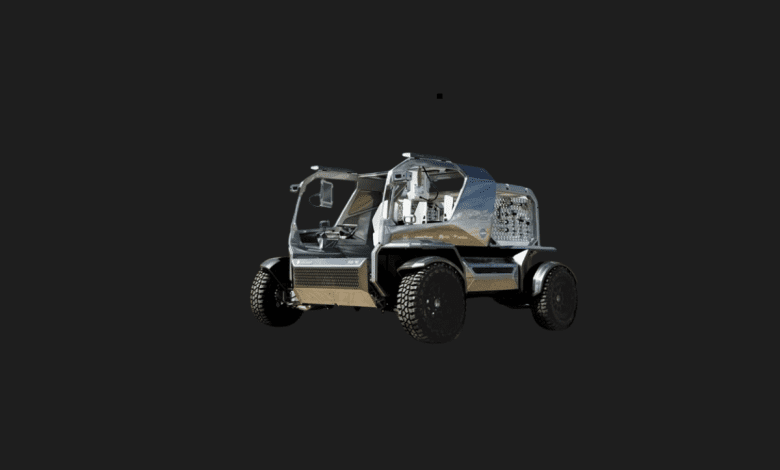

NASA‘s Artemis project involves three different consortiums developing vehicles for surface travel on the Moon. One of these will use technologies from automotive giant General Motors. Here are the vehicle’s features…
Preparations for NASA’s Artemis program give us an opportunity to compare 1970s technology with where we are 50 years later.
Manned Lunar Vehicle to be Developed under the Artemis Project

Artemis, named after the ancient Greek goddess of the Moon, is a multi-stage project aiming to support manned exploration missions to the Moon’s south pole and build a space station in lunar orbit. For Artemis V, its fifth phase planned for 2030 or later, an unpressurized terrain vehicle will be developed that astronauts can travel in while wearing appropriate suits on the lunar surface.
This vehicle will be the modern-day version of the Lunar Roving Vehicle, first used during the Apollo 15 mission in 1971. Three different consortiums are competing to develop this vehicle, named the Lunar Terrain Vehicle (LTV). One of them, Lunar Outpost, is collaborating with the automotive giant General Motors (GM) for battery, chassis, and autonomous driving technologies. GM recently announced how it plans to meet NASA’s battery requirements.
The original Lunar Rover had two 36-volt silver-zinc potassium hydroxide non-rechargeable batteries. Although impressive technology for its time, the inability to recharge the batteries and high-temperature sensitivity limited the vehicle’s range to 97 km. Astronauts on the Apollo 15, 16, and 17 missions had to share this range.
Will Travel at Least 30,000 km Over 10 Years

The new LTV will be much more advanced. The rechargeable battery pack will be usable for 10 years and, along with solar panels, will allow the vehicle to cover a total of at least 30,000 km. The vehicle’s maximum speed is aimed to reach 25 km/h, but due to low gravity and low traction, it will generally travel at speeds below 14.5 km/h.

The extreme conditions on the Moon will severely challenge the battery. Lunar day and night last about two weeks each. Temperatures can drop to −173 ∘C at night and remain at this level for days. Since it will be impossible to draw energy from the sun during this period, the battery must have advanced insulation and a self-heating feature.
Instead of developing an entirely new battery technology, GM is adapting its latest design used in road vehicles. It was announced that the LTV will run on lithium-ion batteries with a high nickel content NCMA (nickel-cobalt-manganese-aluminum oxide) chemistry, which are used in GM’s current electric vehicles (e.g., GMC Hummer EV, Chevrolet Equinox EV). The batteries will be integrated into the chassis to optimize the vehicle’s center of gravity.
To increase durability, the batteries will be fault-tolerant, meaning they will continue to operate even if some cells fail. Additionally, heating elements and powerful insulation will be added. GM will use laser welding technology and flash thermography scanning to detect welding defects for flawless quality in battery production.
Capable of Crab Walk and Zero-Point Turn
The LTV also utilizes GMC’s off-road driving technologies for better movement on the Moon’s challenging terrain. Thanks to four independent electric motors, the vehicle will be even more agile than the electric Hummer. Furthermore, with the Hummer’s crab walk feature, additional motors, and independent wheel steering, it will also be capable of a zero-point turn.
Although designed for easy access by astronauts in spacesuits, the vehicle will mostly be used with autonomous driving or steered from Earth. Various sensors, such as LiDAR, radar, and high-resolution cameras, will be used for this purpose.
In addition to NASA’s LTV project, a Pressurized Rover is also on the agenda for the future. This vehicle will allow astronauts to take longer journeys. NASA plans to allocate an additional $7 billion for Moon and Mars research in its budget proposal for next year.
NASA is expected to select the official LTV provider from the three candidate designs this year. Artemis V will be the third manned lunar mission of the Artemis series and will provide astronauts with a vehicle for the first time.
You Might Also Like;